
IP Intelligence

Stop known threats before they reach your environment.

Better protection starts with better intelligence

Organizations invest heavily in firewalls, WAFs, DDoS protection, VPNs, SIEMs, and other security controls. But even the most advanced defenses are only as effective as the intelligence behind them. IP Intelligence helps security teams make smarter decisions by providing accurate, real-time visibility into malicious IP activity.

46M requests

Some known malicious IP addresses have been recorded generating more than 46 million requests, demonstrating the scale and persistence of modern cyber threats.

High-confidence IP intelligence that strengthens every layer of your security stack

IP Intelligence provides a curated feed of malicious IP addresses designed to complement your existing security infrastructure. Continuously enriched by Mastercard Threat Protection's extensive threat visibility, the feed enables organizations to proactively block known threats and improve detection accuracy.

  • Stronger resilience

    Strengthen defenses with a continuously updated feed of known malicious IPs spanning multiple threat categories.
  • Faster detection

    Identify and stop malicious traffic before attacks can progress, reducing the resources spent on remediation and response.
  • Greater precision

    Improve signal-to-noise ratio with focused intelligence on verified malicious activity.
  • Improved visibility

    Use IP intelligence proactively to prevent attacks or retrospectively to investigate suspicious activity within your environment.
42-74131729

Optimize protection across multiple threat vectors

IP Intelligence classifies IP addresses based on observed malicious behavior across Mastercard Threat Protection's global sensor network, providing actionable context that security teams can immediately use. The feed includes intelligence related to:

1 Credential Stuffing

Credential Stuffing

Identify and block IPs associated with automated login attacks that use stolen credentials.

2 Port Scanning

Port Scanning

Detect IPs probing networks and systems for vulnerabilities before an attack occurs.

3 web attacks

Web Attacks

Stop IPs linked to application-layer attacks such as SQL injection, cross-site scripting, and remote code execution attempts.

4 Malware

Malware

Block IPs observed delivering or distributing malicious payloads.

5 DDOs

Application DDoS

Defend against IPs associated with high-volume application attacks designed to exhaust resources and disrupt services.

6 network

Network DDoS

Identify sources involved in distributed denial-of-service attacks targeting network availability.

7 VPNs

Anonymous Proxies & VPNs

Detect traffic originating from masked or obfuscated sources often used to conceal malicious activity.

8 spam

Spam

Block IPs known for sending unsolicited or malicious email traffic.

8 amplification

Amplification Attacks

Identify infrastructure being leveraged in reflection and amplification attacks.
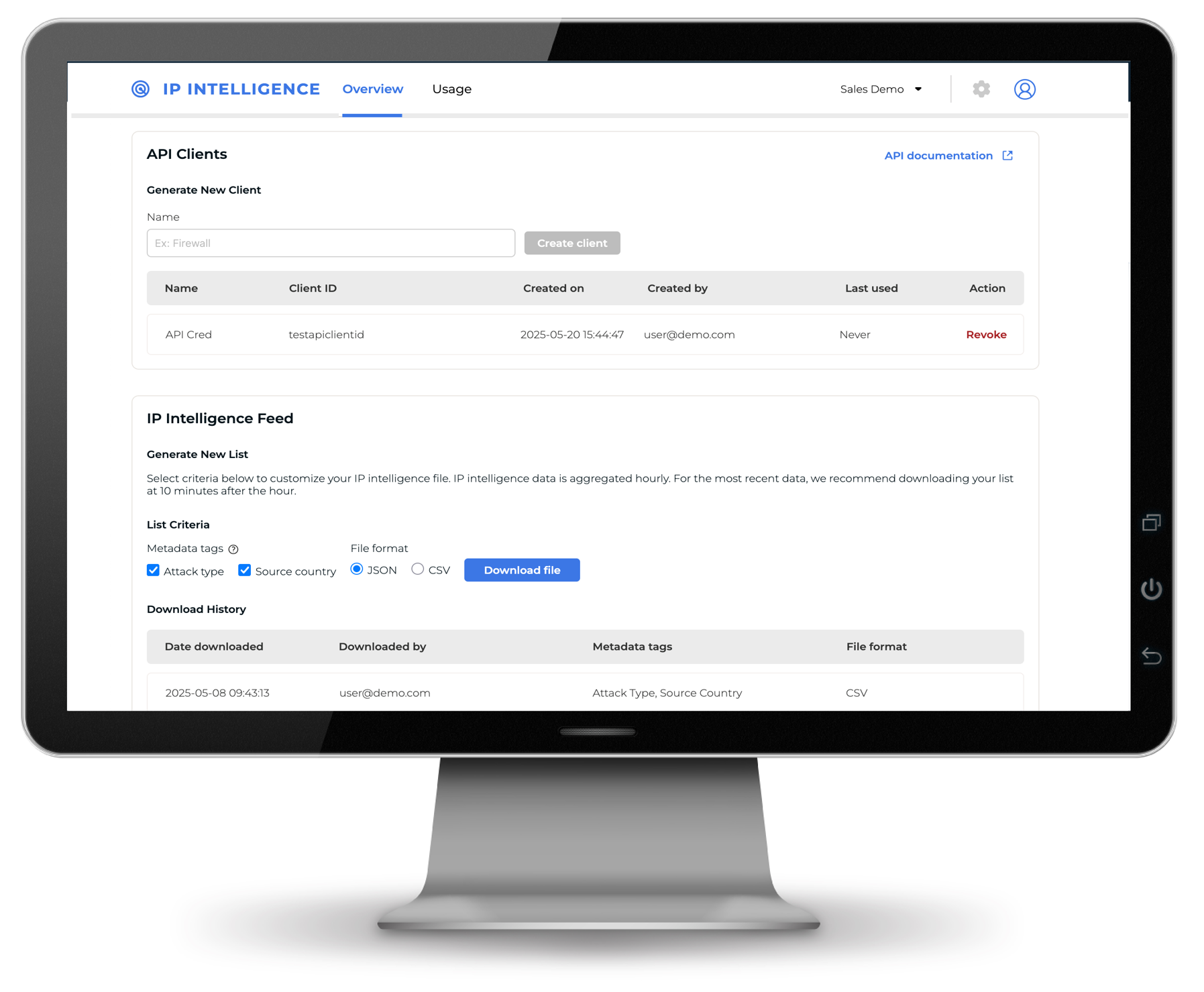
Put threat intelligence to work across your security operations.

IP Intel portal mockup
  • Augment Existing Security Controls
    Use IP Intelligence as a live blocklist within firewalls, WAFs, VPN gateways, routers, and cloud security platforms to stop known threats before they reach critical assets.
  • Accelerate Threat Investigations
    Cross-reference malicious IPs against SIEM, IPS, and log data to uncover hidden threats, identify attackers, and strengthen incident response efforts.
  • Enhance Reporting
    Track evolving cybercrime activity and gain insight into threat trends using intelligence derived from Mastercard's global sensor network.

Get in touch to strengthen your defenses with actionable IP intelligence

Learn More

Dive into our resources to uncover crucial insights through our detailed blogs and reports.

Why Cyber Resilience Breaks Down & How to Fix It
by RiskRecon
Learn why cyber resilience often fails and discover how ongoing crisis exercising can enhance your organization's preparedness and response capabilities.
5 Key Takeaways on the Future of Cyber Crisis Exercising
by RiskRecon
Discover how cyber crisis exercising transforms organizational resilience by turning plans into performance, enhancing decision-making, and ensuring continuous preparedness.
Why Most Third-Party Risk Tools Miss Critical Issues and What Enterprises Can Do About It
by RiskRecon
Learn why many third-party risk tools fail and how a data-driven approach can enhance your vendor risk management for better security outcomes.